

What are the classification of roots blower?
2021-08-22
Summary
What are the operating conditions of the roots blower? 1. The inlet temperature of the conveyor medium usually cannot exceed 40. The particle content in the medium cannot exceed 100mg/m3, and the maximum size of the particles cannot exceed half of the minimum working interval.
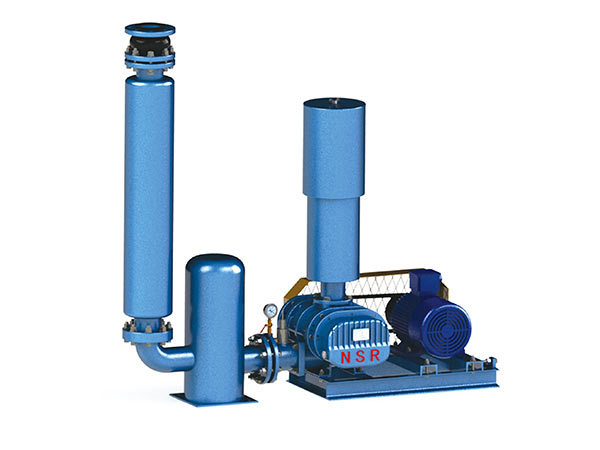
what are the operating conditions of the roots blower?
The inlet temperature of the conveying medium usually cannot exceed 40 ℃.
The particle content in the medium cannot exceed 100mg/m3, and the larger size of the particle cannot exceed half of the working time interval of the smaller system.
3. During operation, the bearing temperature shall not exceed 95 ℃, and the lubricating oil temperature shall not exceed 65 ℃.
4. Roots blower can use working pressure. We cannot exceed the boost range specified on the nameplate.
5. The clearance between the impeller and housing, impeller and side plate, impeller and impeller of Roots blower has been adjusted in the factory. This clearance must be ensured when reassembling.
6. When the Roots blower is running normally, the main fuel tank and fuel tank oil level should be located between the two road red line countries of the oil level gauge.
7. Check whether the connection part of the inlet and outlet has forgotten to be fixed, and whether the support point of the pipeline is complete. Blowers and vacuum pumps that need to pass cooling water should ensure that the installation of cooling water meets the design requirements.
what are the classification of roots blower?
Roots blowers can be roughly divided into first-class and second-class blowers according to their working methods. Among them, the company has only one blower that can compress. We cannot call it a single-stage blower. Two single-stage blowers are connected and developed to continuously compress the body. The blower twice is called a double-stage serial blower in our country.
According to the number of design impellers: two-leaf Roots blower and three-leaf Roots blower;
By use: kiln blower, gasification blower, aeration blower, etc.
Various media: blower, gas blower, hydrogen blower, sulfur dioxide blower, etc.
According to the transmission method: direct blower and connected blower, etc;
According to the cooling treatment method: air cooling blower, water cooling blower, countercurrent circulation cooling control blower, etc.
Structure type: vertical blower, horizontal blower, vertical axis blower, dense group blower, etc.
Seal type: labyrinth sealing, rising ring sealing, packing and sealing, mechanical equipment sealing and other teaching styles of blowers.
The wind pressure of the Roots fan is not limited by the fan speed. Regardless of the speed and how it changes, the wind pressure can be kept constant. Air volume is proportional to fan speed (e. g., Q = KN)
q: represents air volume n: fan speed k: coefficient
It can be seen from the formula that the air volume adjustment is completely changed by the frequency converter to achieve stepless speed change and achieve the effect of adjusting the air volume. According to the actual application of technology on the construction site, the lower working frequency of the process fan is 15HZ, generally around 35HZ, and the total airflow of individual students is 50HZ instantly. Because of the kiln process, the basic application of variable speed technology in all different furnaces can also achieve about 40% of the energy saving effect.
Roots blower with a certain torque load, its energy saving rate and speed continuously decreased in direct proportion to the degree of N%= N%, and ordinary control fan and different, pump energy saving rate is high, but the power, if the furnace wall is not bad, the continuous system running 24 hours, running time is long. Therefore, the power saving potential is large, and the power saving cost is high.
After the transformation of Roots blower technology, in the past, the opening of the export (import) valve of the enterprise was adjusted, the production and life style of adjusting wind pressure or air volume was changed, the intensity of social labor relations was reduced, the timeliness was adjusted, the qualified rate of the company's products was improved, and the unit consumption was obviously reduced.
Previous:
Contact Us
E-mail:
sanniu888@126.com
Telephone:
400-6531-228/0086-531-83288777
Address:East Industrial Park, Xianggong Sub-district Office, Zhangqiu District, Jinan City, Shandong Province