

Roots vacuum pump: Notes during the use of Roots vacuum pump
2020-12-07
Summary
The working principle and performance characteristics of Roots vacuum pump: Roots pump and lobe pump are basically the same, but the rotor is Roots type. It can transport liquids with a viscosity of tens of thousands of centipoise. Roots vacuum pump is mainly composed of two counter-rotating rotors in the pump body and driven by a pair of synchronous gears. The rotor of the Roots vacuum pump meshes in the pump body, but there is a gap. The size of the gap mainly depends on the viscosity of the liquid, and the viscosity must be adjusted outside a certain range to increase the gap.
Roots vacuum pumpThe working principle and performance characteristics: Roots pump and lobe pump are basically the same, but the rotor is Roots type. It can transport liquids with a viscosity of tens of thousands of centipoise. Roots vacuum pump is mainly composed of two counter-rotating rotors in the pump body and driven by a pair of synchronous gears.Roots vacuum pumpThe rotor meshes in the pump body, but there is a gap. The size of the gap mainly depends on the viscosity of the liquid, and the viscosity must be adjusted outside a certain range to increase the gap.
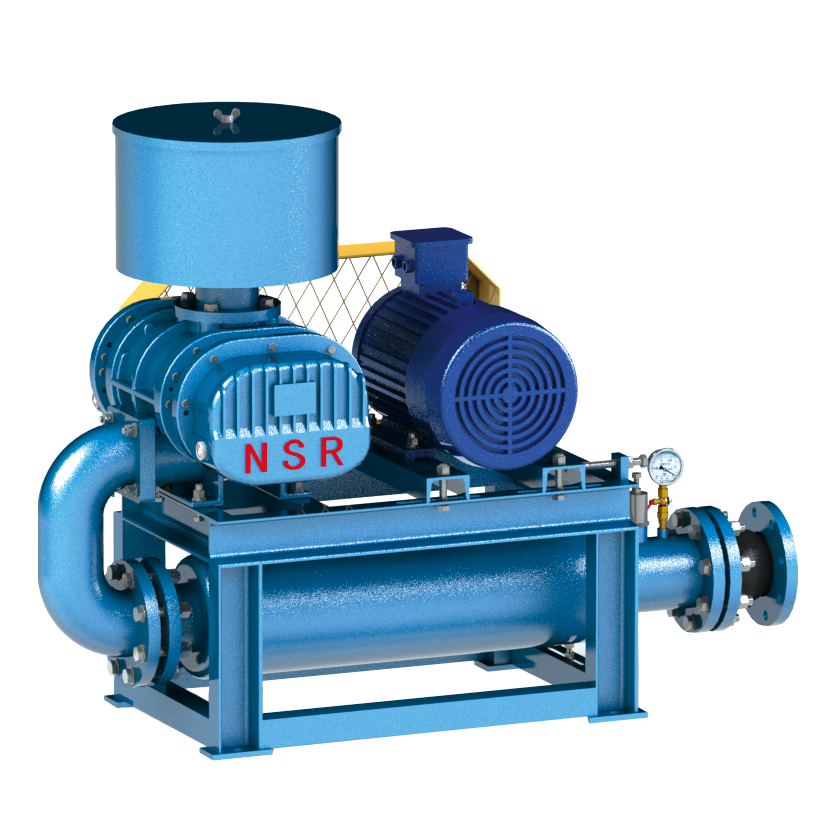
1. The Roots vacuum pump often checks the position of the oil level. If it does not meet the requirements, it must be adjusted to meet the operating requirements of the Roots vacuum pump, and the oil level standard shall prevail.
2. The oil change period of the Roots vacuum pump is determined according to the actual usage, which can meet the user's performance requirements and other considerations. Generally, the new Roots pump can pump clean gas. It is recommended to change the oil and work for about 100 hours before you can see the oil. The ferrous metal powder may be filled with oil after the deadline.
3. The Roots vacuum pump often checks the quality of the oil, and finds that the oil has deteriorated in time, and replaces the new oil to ensure the normal operation of the Roots vacuum pump.
4. Under normal circumstances, the Roots vacuum pump should be checked after 2000 hours of operation, check the aging degree of the rubber seal ring, check whether the exhaust valve is broken, clean the dirt on the valve plate and the exhaust valve seat, and clean the entire root pump The parts of the cavity, such as the rotor, the rotary vane, the spring, etc. Usually use gasoline to clean and dry, wipe the rubber parts with a dry cloth to dry them. Handle gently and carefully when cleaning and assembling.
5. Lubricate the lubricating oil of the vacuum pump bearing to the bearing body, observe that the oil level should be at the center line of the oil, and replace or add lubricating oil in time.
6. Roots vacuum pump Check whether the pipes and joints of Roots vacuum pump are loose. Manually rotate the Roots vacuum pump and observe whether the Roots vacuum pump is flexible.
7. The Roots vacuum pump should be reassembled after commissioning. Generally, it should be vented for 2 hours to change the oil twice. Because cleaning the Roots vacuum pump will leave a certain amount of volatiles, it can operate normally, and then make it operate normally.
8. The Roots vacuum pump starts the motor. When the Roots vacuum pump is running normally, open the outlet pressure gauge and input the Roots vacuum pump. If the corresponding pressure is displayed, please gradually open the gate valve and check the motor load.
9. The Roots vacuum pump tries to control the flow rate of the Roots vacuum pump and the head range shown on the header to ensure that the Roots vacuum pump operates with high efficiency to achieve a greater energy saving effect.
Contact Us
E-mail:
sanniu888@126.com
Telephone:
400-6531-228/0086-531-83288777
Address:East Industrial Park, Xianggong Sub-district Office, Zhangqiu District, Jinan City, Shandong Province